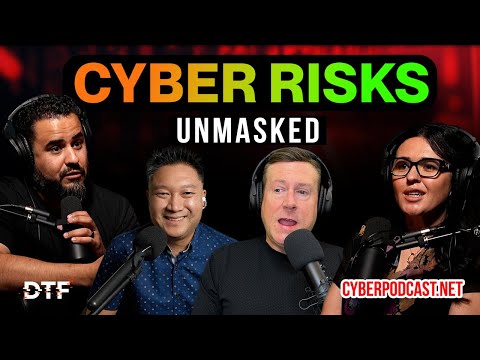
The Hidden Dangers of Cyber Risk Reporting — with guest Dina Mathers
0:00All right, today is Monday, August 18th, and we have a special guest with us today. But before we get to who that is, we're talking three major topics. We're talking about a Wall Street Journal article and how measuring cyber security
0:18has become an issue. And the issue is what is the best way to understand the impact of the dollars being spent. The next article we're talking about is how those measurement gaps lead to underfunding certain technologies. How
0:33businesses are struggling to keep up with the current threat landscape simply because they're not getting enough money. And the third topic is how when governments or certain sectors start threat hunting, what they find and what
0:48they're finding is there are a number of gaps in critical infrastructure everywhere. All right, this is episode 16 of the DTF Cyber Podcast. I'm Damian. This is Troy. And it's your boy Fern.
1:06[Music] [Music] So, I don't even know how to introduce this person, but we're going to give it a shot. We're going to say the one, the only,
1:24the awardwinning global, at least national 16year veteran, Fortune 500 CISO.
1:40The first name is Dena, the last name Mathers. Dina, say hi.
Hi. Thanks for having me. Glad to be back. She's back, people. But she's back in a new capacity cuz today we're bringing her into the club of the cyber
1:57podcast.
Yeah. Here's an interesting fact. Right. Um I think the reason why I met you, Fern, is because Dena had brought your name up. She had just done your other podcast. Do you remember that, Dena?
I do. So there would no would not be a
2:14cyber podcast because Fern and I would have not met had Dena not mentioned your name Fern.
Wow. Thank you, Dena.
So um you're the reason, Dena, that I now do this weekly and I am stuck editing
2:30on the weekends, but you're
I did I didn't actually know that, but I'm I'm honored. Yeah, I didn't. Yeah, I said I never really thought of it like that way, but I thought of it more like um But I guess that makes sense because you were at an event that Damen was hosting and lo and
2:46behold, now Damian and I and Troy have started hosting our own events.
Pretty crazy.
Love it.
Mhm.
Yeah.
And for the listeners out there, if you're wondering,
Sure.
We're doing another event in I think. Right.
We we'll get another one going. But uh
3:03the the one thing that Fern asked me to do was his other podcast and I said I said I didn't have time to sit down for 2 to three hours. But what's crazy is that we do this for an hour every week now. So it actually turned out to be more time.
Yeah. He he didn't have enough time for
3:19me oneon-one, but he's got enough time to do uh you know a guest or a few people like on a podcast every week. So who's the real winner? Me.
Hey. Hey Fern. One thing I was going to mention is that our DTF dinners have
3:34turned out to be a really great way to get people together. I don't know if you want to talk about the one we did in Scottsdale or even here in Las Vegas during Black Hat. Like people are coming together. So, I really like the the theme of a DTF podcast dinner and we're going to try to do these either quarterly, maybe even more frequently uh
3:50in cities near to you. So, you know, those have turned out to be so great. Come out and hang out with the folks you hear on the podcast, but also meet security leaders in whatever city you were in. I think it came out really great.
Yeah, I could just uh cover it real quick and say we did an event. We had 20
4:06seats available. Every single seat was packed. Uh there was someone in every single seat. Um it was a couple weeks ago. We haven't released any information about it, but it was sponsored by an up andcoming stealth company with some
4:21very, very interesting technology. So, the way I like to see it is we're bringing you the latest every week in news, but we're also bringing you some of the latest technologies coming out of stealth. So, in stealth, but looking to work with clients in in the local markets. So, you know, I guess you can't
4:38really uh protect against the latest threats if you're not using some of the latest tech. And maybe that's how we look at it is we're bringing you the news and the companies that are changing the way the way the threat landscape is evolving. So, you know, the funny thing with friend is like we talk about networking all the time and like, you
4:54know, the best way to get into the industry or progress in the industry is to meet your peers and network and, you know, put yourself out there in the right place in the right time. And these dinners, I've always met somebody new, new security leaders, new people I've not met before who are doing, you know, excellent work at whatever their company is. And so, these dinners are a way also
5:10to network and and meet new people in the industry.
Yeah. And you know what's even crazier about that is I've had people reach out to me that I haven't talked to in years and they're saying, "Hey man, looks like you're crushing it. I see you everywhere. I see pictures of you with a bunch of people like what's going on?" Like people are asking me to have coffee
5:26dates with them now. Like
Well, cuz now you're famous.
Yeah, maybe I wouldn't say I'm famous. I'm just uh I'm more uh visible, right? But maybe that means I'm famous. Who knows? I walk around with a Sharpie now just in case anyone wants a signature. by the way.
5:43I'm just kidding. Just kidding. Um, so let's get into the first topic then, right before it gets too late. Measuring cyber security. Now, this is kind of a I think it's a very uh what's the word I'm looking for?
6:00People get in fights over this stuff. We'll just say that because what I've noticed with all people that I've met in security is everyone is always looking for more budget to do different things. And the other thing that I've heard from these people in security is it's really
6:16hard to convince leadership that it's worth the money. So to me it seems there's a disconnect on how security leaders are communicating to the business not just the risk but the financial impact of
6:31making investments and what that impact or what that investment could lead to or prevent from happening. So this article makes it very clear that some places look at cyber security spend as a percentage of total revenue of the
6:48business which might work but I think there's a lot of nuance there because depending on the industry that you're serving whether it's healthcare retail finance it's not an easy catchall and I think a lot of people fall under this
7:03well based on how much we earn topline revenue determines how much we spend in every department. So, who wants to go first? Who wants to say what they think and maybe what's the best way to do it? Is there is there a
7:19good way? I don't know. I'm asking.
Yeah. You know, friend, the the companies I've worked for in the past. I mean, everybody measures cyber security differently. I always love to map to a framework. I'll talk about NIST all day long as you know, but uh I think that every company has this set of magical metrics that they've been looking at for
7:36years and they want to see those numbers increase or decrease depending on what the metric is. I don't know that there's a right metric for you per se, but you know, one of the most important things is, you know, meantime to detection of threats, meantime to remediation of those threats. And so there are some specific metrics that really matter to
7:53threat exposure. Uh but then you have like compliance metrics like you know how fast are we patching versus the the vulnerabilities and you know you have all these other patching uh fishing you know how many clicks do we get in a fishing campaign there's there's a whole stack of metrics that people can choose
8:09from when they're presenting them to leadership but what I have also found is that leadership likes consistency so if this month I'm showing them you know patching and fishing and you know uh sock metrics next month I don't want to come in with 10 other new metrics and educate them on something new and So I
8:24think it's just a matter of what feels right for your culture and leadership. Uh and then as you talk about mapping that to dollars using the fair model, you know, using the MITER attack framework, using uh another framework that I love to say here's where we have
8:39exposures and or gaps in our cyber security uh you know, roadmap and here's how much money it's going to cost to fill that gap versus how much money it would cost us if we have an exposure because of that gap. And if you can use that to kind of use datadriven points to
8:56show leadership that you actually need this uh is so important. But then on the flip side of that is I get asked this question a lot Dina and I'm going to defer to you on this is like how much is enough? You know we get asked all the time well we spend this million millions of dollars on cyber security. How much is enough? And so how do you answer that
9:11question?
Yeah. So I I think as that's a bit of a difficult question to answer, but when I'm doing budgeting say for next year. I do use the industry benchmarks as far as like the percentage of cyber security as
9:27a percentage of IT budget or the number of employees um that I have or revenue. But I really use that more as goalpost just to get a kind of baseline understanding because it's such a wide range especially if you're working at a Fortune 500 company with 20,000
9:45employees. You're if you're using these benchmarks, it could be say your cyber security budget from should be anywhere from say $5 million to $17 million. That's a huge variance. And so for me it's more of like a litmus test. And then I say okay this is how much I spent
10:01last year on cyber security. And then Troy, to your point, here are additional funds that I need to close some gaps using a riskbased approach. That's how I set it up for budgeting, but that's not necessarily how I get funds for
10:16different use cases. That I almost view more, and I know you mentioned consistency, but I almost view it more like a resume where there's a template and you start with why. Like why do we actually need to make this investment? What's the business impact? Is it reducing cost? Is it improving user
10:33experience and then um using that to like articulate your business need? That seems to be effective at least from my perspective on getting funding.
I um
Damian, what are your
Yeah, I think I
so underrated you know the business use case. Absolutely.
Yeah, I I think about it in a in a
10:50different way. I think you're, you know, trying to figure out how much other people are spending on on cyber based off of percentage of it and percentage of revenue and things like that are really high level. Um, if I put it this way, right, if you have kids and your
11:06kids always say, "Well, my friends get x amount of candy a week." And I look at them, I say, "Well, you're I I you know, I don't adhere to that standard. You shouldn't be eating any candy. um don't you already have enough candy in your in your candy box? Right? So, some of those
11:23things kind of just resonate in in in cyber security because I don't know if you're ever going to get enough funding and it really doesn't matter. I mean, I I get it. You want to measure it according to your industry peers, but if you look at turn it around and look internally because I'm highly
11:39operational. I want to be able to spend what I already have and make sure that my tools are implemented efficiently, right? Right? We talked about this in other episodes where there are organizations that have a ton of tools and maybe only implement 20 or 30% of
11:56them or they'll take a new tool and only implement, you know, the tip of the iceberg and not get everything operational or integrated. So I I want to like turn the conversation around a little bit and say, okay, maybe maybe the fight is on
12:12the top end of looking for that initial budget, but once you get it, what do you do with it? Right. Is that a concern for you guys?
Yeah. And I also want to say I like to carve out some innovation dollars. Right. So part of my budget I every year I earmark a certain amount uh small
12:28percentage of the overall budget but a small amount for innovation. And what I mean by that is startups we we love to lean into innovation and some of that new technology coming out where we can you know do a POV or a PC with a new tool. You know a lot of people don't like to take chances on new companies because they're not established. They
12:44may fail in a couple years and may get acquired. And I see all those risks, but I also see the benefits of leaning into innovation where you're solving real business problems at a fraction of the cost that this product.
Yeah, but Troy, you're going to have you're going to have the same problem. I mean, even if you get a new technology,
13:01if if the the organization never adopts it or never operationalizes it, what's the benefit?
Right. Exactly. And I think we talked a few weeks ago about my director of strategy and innovation. His job was to take every tool we invested in and give
13:16me an ROI metric. You know, are we uh leveraging all the tools that we've paid for with that tool, show me where it's reducing risk, and uh you know, evaluating your tools every year, kind of like an audit of your spend to say, am I getting the value out of these tools? I know in my last couple years in
13:31my previous company, we were looking at you know, reducing the number of tools, but improving the impact and doing that through the ROI calculator was so important. Yeah, I think you both touch on like tool rationalization, right? To we're well intended. Sometimes we overinvest
13:48in technologies and then we're not using all of the functionality and capabilities. So, it really is around rationalizing those investments and figuring out does this actually make sense anymore given our current strategies or priorities and aligning
14:03that with your renewal date. And in some cases, you might be able to rip and replace because you really didn't deploy or operationalize the tool. So, yeah, I definitely think that's important. And that's uh Damian, you were mentioning this. One of the ways you can get
14:19funding is being able to say, well, I'm going to replace this technology with maybe a startup or a lower cost option or in some cases maybe it's a higher cost. But those are a bit easier to sell because you're already kind of spending the money in your budget versus
14:35something that's net new. But I think it's important to highlight like, hey, we saved seven figures because we got rid of these tools that were redundant or weren't fully deployed or um operationalized.
So you don't actually have to go back
14:51and get more funding because you you just found the savings. Yeah.
True. Yes. Absolutely.
So I that's what that's my point, right? I I think that there's one side of it where there are security leaders who are going there and saying I don't I never have enough money or I need more funding
15:07and they're trying to measure against what their peers have or what other companies in their vertical have but it never matches up one to one and so you can always look turn around look back at okay what do we currently have what's in our stack and what can I make more
15:23efficient uh and I'll tell you this right now I So, Dina, you you you talk a lot about automation, right? I have automation within my operations as well that save us 20 FTEEs a year just off of that automation. And so, that's easy for
15:39me to go back and say, look, we spent X amount, but I'm saving 20x on the back end by not deploying 20 different um resources to do these jobs. So, interesting point here. While you guys are chatting, I was uh checking some
15:57things online and what I find interesting is that roughly based on Gartner's estimates in as of 2023, right? So not old but not brand new. Um 30% of a cyber
16:12security budget is wasted on overlap and underutilized tools. So a and whether that's something having a capability that another tool that you have so you have a primary tool um what
16:28you say a famous company out there for security firewalls that happens to offer a service around other areas of technology because they offer platforms and then you happen to buy a point solution that does what this other product has capability of doing right
16:44but you do it because it's a
what Troy calls best of breed.
Yeah. best of breed. So you're looking at platform best of breed and we talked about this I believe it was last week but because of that overlap 30% of the budget is essentially wasted. So my
17:02question for you guys and ladies is is it better to go in and ask for more money first based on the goalpost and the metrics that you have or should people focus on reducing the overlap
17:19showing that savings and then redirecting those funds within the same calendar year or do you maybe are you aware of that and you understand where that is so you just leverage that later with the expectation of not renewing. So if you have three products and one of
17:36them is an overlap when you when you submit your budget, do you just leave it as is and say, "Well, we have to renew with the intent of kind of transitioning those funds from that third product into a new product that maybe wasn't on the road map."
Well, I think you're oversimplifying it.
17:53That's that's the problem, right? The the overlap is not a 100% overlap. If it's a 100% overlap, that's just a duplication in the tool. Um, what's happening is that there's these, you know, not not full platforms, but there are now tools that are kind of creeping
18:10into other areas creating an overlap. But what you have to do is figure out is that the best, you know, the best implementation or best feature technology for your organization. So I wouldn't say you know eliminate all overlap because we are seeing right
18:27we're seeing an EDR company get into the SIM space. Is that the best use of your dollars to just bundle that in with the same or do you stick with your original SIM? And then we saw Black Hat there are new technologies coming up saying you don't need your SIM. And so there's you
18:43you got to it's not an easy hey let me eliminate all these overlaps because they're starting to creep in. Like we we just saw a big um firewall company pick up an identity company, acquire an identity company. So now what do you do,
18:58right? Do you go to these massive platforms and and implement everything they have or do you start to look and compartmentalize each of these security towers and and do best of breed?
Yeah, I think Damen brings up a good point. Not every overlap is the same, but I
19:16think it's prudent to evaluate your technology spend, especially for upcoming renewals to determine like, do you actually need this capability or is there a tool that you can use to replace it and then potentially reallocating
19:31those funds? But yeah, Damian, your point resonates with me because there are a lot of platform players out there that have bolted on features just to say they have this capability, but when you look under the hood, it's not no that doesn't meet your requirements, right?
19:47It doesn't have the coverage that a purpose-built tool might have. So, you might have to invest in that best of breed or specific tool that addresses that gap.
I think that's the argument we have with procurement, right? uh I'm pretty sure you faced this Dena where procurement
20:04will say well why are you looking at that tool we already have it bundled in with this package and and really the the features are just not there to protect the organization
yeah I I tell you it's the same old story you know I think all of us have this massive platform in our environments that offers the SPM as an
20:21example uh what I would call not that great the SPM is of generation one and then so you go out and you look for that capability but your CFO or your procurement says, "Hey, we already have this. It comes as a part of this other thing." And you're like, "We it doesn't do what I needed to do to find and
20:37classify and to tag the data that I need to follow." So, you have to really be on your toes to point that out. And sometimes those platform players, they don't sell to the CISO, they sell to the CFO. So, they they bypass you trying to show the things and the money that you can save if you go with their platform.
20:52But, you know, this is the age-old question of best and breed versus, you know, um platform. What I was going to say, Dena, is that I've never been told no when asking for a budget. I don't think any board or leadership wants to say no to a cyber project and then have a breach. Right. So, I I think the
21:08important part is if I'm doing my job as a CISO, I'm bringing data driven points that show I'm being responsible, you know, with the money that I've been given and I'm replacing a tool with uh a new tool or I'm reducing my cost over here so that I can offset the cost of this new thing. Um, but I've just never
21:24had the problem about going in and asking for budget. It's more about how do I how do I articulate that need um in in my own roadmap? And we talked about, you know, metrics. I love metrics if they're the right metrics. Um some people are still holding on to old metrics from 10 20 years ago that don't
21:41really make sense anymore. And especially with the age of AI and how fast we're able to progress in the security operations center and other places, I think our metrics may have to evolve with us so that we can articulate that data story uh a little better.
21:56Yeah. Since you brought it up, Troy, I I was going to say, Dina, do the AI in reporting, I think, is a really interesting topic. Have you guys started to look in into AI reporting metrics like using AI to report for you?
22:14Yeah, we do have like bi-weekly syncs as a technology leadership team and I have used I've fed it some data and it has produced some operational metrics to help us articulate some of our top initiatives or projects and how we're
22:30reducing risk. And to Troy's point about because he brought up DSPM and that's something near and dear to my heart that we're actively working on. It's not just the cost of the technology, but I've been able to say, well, it's going to accelerate our data retention, which is
22:46actually going to drive down our cloud cost because there's this misconception that cloud storage is cheap until you accumulate pabytes of data in the different cloud environments. So, that's also like an effective way to to, you know, get the funding that you need.
23:02But, yeah, I I'd say I'm kind of in the early stages, but we have leaned very heavily on AI. uh obviously to triage like tier one and tier two events, but just a infancy stage for using it for reporting I'd say. And then I guess
23:17Damen or Troy, do either of you use like cyber security risk quantification technologies and what are your thoughts there?
Like threat modeling or you talking about heat maps and things like Um I'm tone and I don't want to drop vendor names but there are some you know there
23:34are some products out there that supposedly um will like enumerate your you know technology footprint understand the vulnerabilities um and then within the context of your environment um in some cases reclass risk like if a vulnerabilities on say an
23:51domain controller that might be a higher risk than just a internal server or Kubernetes cluster or what have you. I'm just wondering if you have any thoughts there and I mean I have my own but I'm just kind of curious.
Yeah, for sure. Tools that look at what
24:09you currently have in um the maturity of them and are there are there any gaps based off of mis uh configuration or policies that are not implemented? We're we're doing that u and then on the vulnerability side the uh prioritization
24:26and then also the uh just just making sure that it is a true vulnerability and and it's exploitable. There are tools that will do the automatic exploitation just to test it. And so uh a lot of that
Yeah, that makes sense.
Just to make sure because sometimes the
24:42scanners pick them up and they're they're false positives. And so if you take it if you take the automation a step further and you actually try to you know exploit it and you know if you're doing it yourself then you can validate whether it's a true vault or not.
24:57Yeah. And and we were toying with these ideas. We were doing some proof of concepts when I left my last role as a CISO and I think they're a great addition to your repertoire because they plug in by APIs and they can look at all your tools and not only tell you where you have this uh you know heat map for
25:13risk but they can also tell you if you're using all the functions of your tools that you've purchased and are they configured correctly uh to get the maximum value for the tools that you're using. And so I think that's a great new new area of the industry that I would like to explore more um as a CISO. I think that'd be a great help. Well, I
25:30have my own thoughts on it. So, I I do use a cyber risk quantification tool. I think it does provide some contextual prioritization because I think none of us are strapped well, we're strapped for resources, but we have visibility and risk all over the place, right, from all
25:47of our disparit technology investments. And sometimes it's a little challenging to prioritize your efforts. And so, it's helped with prioritization or at least understanding where the top risk are. What I will say though is these tools that say like in financial terms what
26:05your like risk exposure is or the cost of a breach. I personally have chosen not to share those metrics with our executive team because if I can't explain how it was quantified like I don't want to be in the hot seat with the CFO trying to defend this number.
26:22And so I think it's good. It's good good, but it needs a little bit more work because there's not a lot of explanability.
Yeah, I love that. And I also get the, you know, you can save two headcount with this tool. Like that's not what we want to hear when you walk in the door. You know, I don't want to replace my
26:37people. And how do you have that number, you know, off your off the top of your head? It's something that we need to see. We're going to upskill our people. We're going to give them something more important to do.
The automation piece is different because it's not like you're eliminating positions. So we make that clear. It's it's about getting more stuff done and
26:53then elevating the people that are currently in those roles so you don't have to go and hire, you know, somebody just clicking a button. Uh but the the the one the one thing that, you know, I'm I'm kind of concerned about really with those um financial tools that look
27:08at how much a breach would cost or how much uh a certain risk would potentially impact. They're so subjective. So, and that's I agree with you, Dina. It's hard to go in with a number that you don't really understand. And and so let's take a healthcare organization for example. Uh I think there's metrics that say this
27:25is what a patient record is worth or this is the cost of the a breach for every patient record that is leaked. Uh and I don't know if those are completely accurate. It's hard to be accurate on those when it ranges from you know small
27:42organizations to large organizations and then the the brand damage. It's really hard to put a number on it. Yeah, I completely agree with you. So, yeah, I don't present the the financial impact from those technologies to the executive team because I can't explain it, but I
27:57think it's a good understanding like of to prioritize risk. But
yeah, that'd be terrible if you say it's, you know, a $10 million risk and something happens and it ends up costing 40.
Absolutely.
Or 50, right? Uh because that's the one
28:12and they might overshoot, but they also might undershoot.
Absolutely. you're not really sure because there's, you know, it's it hasn't happened, right? Then it's not specific to you. It's just more so based on a calculation. Um, but that kind of
28:27leads us into topic number two, which comes around to measuring gaps and finding out that a lot of security departments are underfunded. We're just at Black Hat and there's a lot of talk about AI and agentic AI, right? And what
28:44that means for upskilling people because you're now moving certain task into automations. And when you when you go to an event and you see every sponsor or every every vendor talking about how you can do more with less, it just requires
29:00that you buy their stuff, right? My fear is that one, these products aren't ready for the market just yet, but two that they're overpromising on what they can actually do because there is a lot of nuance in the world of cyber security.
29:17And I think it might be hard for someone to just simply replace right a person with a tool, but it seems that there's a lot of people saying that. And I guess maybe to expand on that is if you have people looking to do these things, there
29:33might be things that are overlooked, right? So, if there's not a clear way to measure or understanding what you're working with today and what is missing, my fear is a lot of people will kind of lean into this do more with us mentality, find a use case for AI, and
29:50then potentially just completely overlook a small issue that they hadn't thought about before. Right? So, this goes back into underfunding. If people are getting less and they're choosing to try and get more through automations,
30:05how do they make sure that they don't overlook certain things?
Well, let's let's be clear. Yeah, let's be clear. I don't think anyone's getting less. I think it's um like I I don't know of any security budgets that are actually shrinking, but they may not be keeping up with the growth of the
30:22organization. So, uh, I guess in that that case, yeah, it's shrinking according to the growth of the organization, but not necessarily shrinking in actual dollars. I don't know, Troy. Troy, do you know, have you ever worked at a place where your budget has actually been retracted or or shrunk
30:40year-over-year? I have not. No, not at all. But I do talk to mid-market, you know, CISOs and and sometimes what you walk into as a CISO is uh a low budget already and you have to go out and really fight for budget. So sometimes underfunding could just simply be that they have never aligned cyber security
30:56priorities with the business. And I I talked to a lot of people who are walking in fresh to a new role and they're looking at this going how am I going to survive with this budget to do what I need to do and protect this business because you have people, process and technology that you have to invest in and uh you know with limited
31:12budgets you have to be very creative and you know we can do a lot with uh you know what we have but you can't boil the ocean and if you are if you walk into an underfunded organization trying to convince leadership that they need to spend more on cyber is sometimes difficult because they're entire mindset
31:28was built around that first number and you have to explain to them very carefully and articulately with data why they need to increase it. So I can see underfunding especially in the mid-market. Um but you know like you said Damian on the Fortune 500 side there I've never heard of a peer of mine
31:44saying that their budget is decreasing. Um but they are asked to do more with more with what they do have with automation with AI and to lean into innovation to solve some of those challenges.
Yeah. And on the agent AI front, I think Damen, you touched on this earlier. I'm
32:01not seeing it replace like my current team members, but I don't necessarily need to hire new team members because the Agentic AI capability can do the work that I was going to hire say two analysts or an engineer to do. So in
32:18that case, it's not necessarily a replacement. And it's more of I don't actually need to grow the team because I'm going to lean into agent agentic AI instead.
Right. Augmentation, right? Making the team more efficient.
Yeah, absolutely. And then when you were talking about underfunding, I don't know
32:34that it it it's exactly related, but Troy touched on this earlier, you understanding where your gaps are. Like I use NIST cyber security maturity framework to measure impact of you know like how mature are we in these
32:50different domains and help that like use that information to justify budget or even communicate success like last quarter I did these specific projects and it increased our maturity in I don't know identify as an example by doing XYZ
33:07project and that's been helpful and I've consistently artic articulated that maturity journey to our board and and gotten very positive feedback that way and I've also done it at other organizations as well.
33:23That's great de that's exactly what you should be doing and you just touched on something with that story that resonates with me is that CISOs are now businessfacing people where you have to go into the board and be able to articulate. So being a storyteller is so crucial for a CISO instead of being a technical person. what you just said and
33:40how articulate you were with how you used data and you matured in identity or identify sorry u you know that's exactly what they need to hear because these are business folks who are spending money they don't understand cyber they want you to understand it and to go in there and paint a picture like that is so important to be a storyteller as a CISO
33:56more so than it used to be in the past
so I got a question sure cuz I've never had to explain you know how these conversation I've never I've never seen a conversation like what you guys are describing happen where a security professional goes into a boardroom and they plea their case and the choice is
34:13you're you're you get really good at storytelling, right? You can't lose them in the technical aspects of, you know, bites and speeds and speeds, right? You can't you can't do that. So, I'm curious like maybe like what's one of the most effective ways of telling the story to
34:30get the executive teams to understand security more so than approaching it technically, right? because again like I said I I haven't seen it happen but I'm curious based on all of your experiences um maybe the things that are said the
34:46type of story that was told or maybe like a certain framework because you know NIST is not a storytelling framework right but how do you how do you apply concepts of storytelling in this conversation to get the point across so that way you can get to the
35:02outcome that you're looking for I think I'd find that interesting to hear and I'm or you know anyone listening would find that interesting as well.
Yeah, I mean I guess I can take a stab at it. So for for again for this board and previous boards I have used the NIST cyber security framework to measure our
35:19maturity and say like this is our baseline risk assessment and this is how mature we are and what are you going to do to actually improve the maturity. So it's more like these are some projects that we have to increase the maturity over the next quarter and these specific domains and then after or these are the
35:37projects that we've completed and what the impact has been on the maturity but I think and there's not always opportunity but sometimes there are if you could take it you know a lot of executives are reading the Wall Street Journal or other articles so if you can kind of translate those stories to real
35:55things that are happening in the industry that would be helpful. Like one example might be when CDK, which is a very large um dealer management software that impacted all of the dealerships, right? Like using
36:11leveraging that to articulate to the to the board like this is what happened. Like yes, we weren't impacted, but here's the controls that we have in place to prevent this from happening to us. as a one example is I found pretty
36:26effective using like headlines almost
and also you know you're just a so so you mentioned plead your case right Fern but I think it's a little bit more of a misnomer because you are a line item in an agenda on a docket for the board you know before you is the CFO before that's
36:43the general counsel after you as the CIO and so on so you're just a 15 to 30 minute line item in a month in a quarterly board meeting and so you are there to give them a a board update on cyber security. So you're there to update them. Now what they want to hear, how are we doing? What's our risk?
36:59Anything new on an incident front, privacy front, etc. And what do you need from a financial standpoint? And what are you going to do with it? So you have to be very quick, very articulate, and you have to be able to speak that in a way that resonates to the non-technical board member all the way to the person on your board who may have worked for a
37:15large imple is a very good technology. So you be had to make sure your message resonates with everybody around the table. And you're just presenting this is our metrics. This is uh our, you know, next projects that we're going to be working on. Here's 10, you know, uh global news items that you may be
37:31interested in that are either similar to our industry or may impact us. And here's how we were protected against those type of threats. And uh you know, they just want to get a good warm and fuzzy feeling when they leave that room that you know what you're doing, you have a good program, that you're well funded, and you have what you need. And
37:48then uh really the arguments are with your your leadership like my my boss is the CIO and the CFO. That's where the real plead your case kind of comes into play right?
Yeah. For a lot of large organizations, there are subcommittees, right? So you may have an audit committee that then
38:04reports to the board, right? So you may participate in that. You may even have these days an AI committee that's trying to figure out how AI is being used or how we should implement AI within the organization. Uh so there will be these committees that you you may be part of as a security leader or an IT leader
38:22that then report into the into the board. So um there's there's more there's more uh communications than just that short time for the board meeting that that Troy's talking about.
Okay, I guess that makes sense. So it's kind of like the board meetings are more
38:38so make sure that anything bad is brought to the top but then also everything good is mentioned as well and then more so the negotiation and the budget and and kind of the pleading your story happens internally without the board there right the CFO and the CIO
38:54okay so but I do like the fact that you said you take so for you specifically like this as the dealership right it's very we'll say adjacent to the people that are in this room, right? So, I think part of that too is when people
39:11are presenting or or talking, they have to find situations that are close to home but not at home, right? And it's like if you can find a story that's close enough to home but not affecting your home, then it makes it more, as
39:27they say, hits close to home, right? And when people look at their business or the the businesses that they run, right, or the ones that they're a part of and they see someone else that has fallen, it kind of goes back into the phrase of, you know, learn from someone else's
39:42mistakes. So, what's interesting about that is you can easily pull inspiration from people that have essentially kind of fallen on the sword close enough to home to present that as a as a way to say, "Look, if we don't do these things,
39:57we might be in a similar situation." And because it's so close, but it's not close enough, it's not it hasn't impacted you, but it's enough to kind of get people to maybe stand up and and and do some things, right? So, I really like that. I had I hadn't even thought about
40:14that, but again, I haven't presented it before. So, but I I do like that story.
It's like if there's a if there's a big breach at Coca-Cola, it sure gives the PepsiCo, you know, a ammunition to go in and ask for more budget to solve that problem.
Yeah. But not even just Pepsi, right? I
40:30think everybody we we should all be looking at what happened in that incident and break it down to see does that impact our own organizations. Um, we I like to break those down with my team to say, "Here's what happened in this case. Here are the controls that we
40:46have or here's where we need to tweak our our our security layers so that we can address a similar incident happening here." So, you don't have to wait for those leadership meetings and the the executive meetings. You should be doing those within your teams. And if you're, you know, if you're a security analyst
41:02or engineer listening to this today, um, that's a good exercise to do. go take a look at some of the news items, what's happening, how are some of these security incidents occurring and try to solution a response to that. You know,
41:18get I would love for my analysts to come back into me and say, "Hey, I was over the weekend. I was just looking at this this article. I saw that they got an incident based off of these lack of controls. Here's some things I'd like for us to implement." I mean, think about that. If you had an analyst came
41:33in came into your office and said that right away right away you would think this person's a rock star, right?
Yeah. And that's one one thing Damian I was talking about for the board. We had to do that top 10 list. It was a spreadsheet of you know what the attack was, who it affected, but then it was what were the TTPs of the attack and how
41:50were we protected against those TTPs. So that's very important information that your CISO wants to know. So if you're an engineer, as Damian mentioned, it's great to get ahead of that and say, "How would we have handled that if it happened to us?"
That's good.
Yeah, that's like gold. That might that might be one of the one of the best gold
42:07nuggets we've gotten on this episode is for people that are in cyber security because we talk a lot about getting in, right? But once you're in, how do you make the most of your time there, right? And I think Damian's example of an analyst going through and finding recent
42:23events, current events, and looking at kind of um what happened, the cause, and the effect, and then applying that into the the business that they're working for, and taking that to leadership. Now, I don't know about you guys or ladies,
42:41but if it was me and I had someone that showed up and did that for me, instant praise or at least top of the list when it comes to uh being on the docket for the next leadership role or the next
42:56definitely, yeah, shows readiness for leadership, right? Because maybe it's obvious to us to do that, but maybe not so much to our team members to do it. But even, you know, even if you're trying to drive an initiative, I don't know, like you have publicly exposed S3
43:12buckets as an example, and you're still trying to get somebody to make them private as a one example, you you still need to articulate why. And so you could translate that back to like the Capital One breach and and and so, you know, it's just like trying to to Troy's
43:28point, like telling the story depending on what narrative, you know, and what issue you're trying to address. Yeah, but by bringing those in, one thing is for certain is that it shows uh not necessarily leadership, but it shows the
43:43desire to make improvements, right? And whereas a lot of people might not actually be proactive in their approach and they might just come in, do what they need to do, go home, 9 to5 type of mentality. But the one person that shows up and says, "Hey, I did this research. This is what I found. This is how we're
44:00very similar. We could be in a similar situation." The reality is is not everyone in security in leadership of security is aware of everything happening in the trenches, right? And there might be some small oversightes and if that one person were to show up with a problem that no one was aware of
44:17and to potentially save, you know, an incident from happening. Oh, like instant raise. So that's why I said it was probably definitely like a gold gold nugget uh from Damian. I want to just touch on something you mentioned here because it's it's near and dear to my
44:32heart is you mentioned the instant raise right I want folks listening to know that you know there's a lot of times where leaders like Dena myself Damian we want to give our team raises they deserve it you know there we stack rank and we know that we have rock stars that
44:47really deserve and actually need a raise like they're underpaid for the industry benchmarks but our businesses are holding us back there were several people in my my lifetime that I would I would give a raise today if I had that authority to do so, but we're handcuffed by the financials in the business and
45:03sometimes raises and and payroll is outside the cyber security budget or it's handled differently because it's a personnel issue. And so I want people to understand that, you know, sometimes your boss really sees your work, recognizes you and wants to give you a raise, but just can't because of the bureaucratic nightmare that is budgets
45:20and people. So, um, yeah, back over to Damian, but I just want people to understand that there's
that's a completely different topic, but I mean that's that's completely true, right? It's kind of scary that for in order for you to go get a big raise, you have to leave your current organization and find a new job that's going to pay
45:37you a lot more money. And obviously, we don't want to lose the rock stars, but those are the first ones to leave. Um, I I'll tell you this. If I have a a real high performer in my team and they they find a really good job outside of my organization, you know, full support to
45:52them, right? I I I feel great that we had taken somebody and grown them to that that particular level in their career where they can move on and and get a really good job. But I would say this about the um being proactive in in
46:08trying to become that type of analyst or engineer. I tell our interns, so right from the very beginning when the interns come in or new in career, people just graduating, starting their their careers to be proactive. Um, we're not going to
46:24be giving you exact details of tasks that need to be done because if I can script it out and I can automate it, I probably don't need the analyst to do it. And so we already start the analyst at the level where you know if you see something that can be automated go ahead
46:41and automate it right you don't have to ask for permission if you see something that that needs improvement go ahead and improve it um you know obviously go through the proper documentation change control but we're fully enabling our our
46:56analysts and especially the entry- level ones to to make those decisions and I think if you build that culture uh at when they get into that middle level three to 5 years, uh, they start to be more proactive and start to look at these news articles and then come back
47:12to you and say, "Hey, I think we should do X Y and Z so that we can improve our security posture." And and so I would tell you, tell anyone listening that if you're starting your career or you're in that entry to midlevel to be proactive. Um, don't just take tasks and and do
47:28those tasks because eventually if that's all you're doing, they're they're going to be taken over by AI. So you have to move up the stack and and be a little bit more proactive.
Yeah, that's fair. Damian, I I think you're touching on most leaders in cyber security like we don't have the time and bandwidth to micromanage our team. So
47:45we're empowering them to find and fix problems and I can say our u our team is very proactive and I don't need to ask them to do something. They just go and build it, right? they have the the skill set to go do it and as
48:01long as they're opening the right change and communicating the changes to the appropriate business stakeholders I support them and if something goes wrong I take accountability as their leader but you know fail fast take risk. So
48:17that kind of like leads us directly into the next topic because the next topic was more about hunting and finding that there are a lot of issues, right? So the next topic specifically talks about how
48:33there is a large number of widespread weakness in security, right? And what I find interesting about this is to Damian's point about, you know, making a priority to to go out and find these
48:48things internally. Um, I'm curious, you know, how some of these organizations that have a lot of these basic, we'll call them basic issues are overlooked. So, in in a past episode, we talked about an incident that involved
49:04McDonald's with one of their HR systems, right? With a weak password being 1 through six. Um so it it's it's in every in every we'll say vertical in of commercial business that a lot of people
49:19are failing to do the basics and to quotes a friend uh Ashley where she had a presentation here locally at Cactus Con where she said a lot of people worry about the
49:34shiny objects but in her mind you have to get back to the basics. And I've heard that so many times. It's back to the basics. You have to secure the most everything of the business in the most fundamental way and then from there stack on. So I think of it as like
49:50building a house. You have the most solid foundation possible and then from there you can have a fancy house but if you don't have a solid foundation it ends up creeping its way into issues down the line. Right? So
50:06insecurity for all of you, this is more so maybe my first question is how do you go how do you get back to the basics to make sure that some of the most basic issues, vulnerabilities
50:22aren't an issue? Because it's one thing for someone to do an advanced attack and get in through a way that is like one in a million, but to find out that your basic password was 1 through six and they got access privilege access to some of the most critical systems in your
50:37infrastructure because of a simple issue like that's got I mean to me that seems like people lose their jobs over that versus a very advanced attack through like we'll say like a nation state, right?
Yeah. Yeah, that's probably the largest percentage of attacks honestly, Fern, is
50:54the the common misconfigurations or just the the laziness in that matter. And uh I'll say just in past penetration test at every business that I've been at for the last 20 years, there have always been findings of very foundational common sense problems. Default passwords
51:12uh on printers, servers, computers, you name it. uh open SSL, sorry, open SMTP servers, relays where you can just relay email out or in to people and bypass all your systems. There's just been so many um just common should be known problems
51:28that employees missed. So to your point, like we're we're spending tons of money, millions of dollars on new fancy AI equipment. We're not even changing the default password on the printer so they can, you know, grab the LDAP and and turn it around and get an identity and use it against us. So these massive
51:44attacks we're hearing, these big breaches, they're not normally a, you know, a sophisticated zeroday exploit. They're usually just the default printer password and then they're grabbing an LDAP identity and going from there. So
yeah, Fern, you mentioned this earlier in another episode, right? It's like the door is left open. So, you know, the the
52:02criminals just have to walk right through. I would say the number so getting back to the basics, what about assets? Do you guys even know where your assets are? And I'm not talking just physical assets, but data, right? So, I think that's we've been talking about this recently. Where where are your
52:18assets? So, maybe you don't know that there's a printer out there. Maybe you don't know that there's a laptop out there. It's not in your inventory. Um or you don't know that data is sitting in some cloud repository that you just had no idea existed because somebody spun up an S3 bucket on their personal credit
52:35card. So, those are the basics, right? just trying to figure that stuff out so you can protect it.
Yeah, that I think that resonates with me. And what I've done is I I call it like a periodic table. I actually have something that I can share and link it
52:50in in the show notes, but it's like there's all these different attack vectors and you know the concept of the network obviously has changed with remote work, but you know what controls do you have on your endpoint? What controls do you have for data and then what's your coverage like? And so I'm
53:06using like operational metrics to kind of say from an adversary perspective, what vulnerabilities are on our perimeter or our edge and then kind of giving ourselves a report card and then inside out like the reverse. Um, and so
53:22that's been effective to to Damian's point, identifying maybe shadow it or misconfiguration that you didn't actually know about.
That sounds pretty cool. A periodic table. Well, yeah, it's just it sounds fancy. I I'll link it in the show notes
53:38if you want to, but yeah, it's it's been helpful to me to to show even like underwriters or the executive team like why have we invested in this and what controls do we have in place to mitigate some of these for lack of a better word like low-level or unsophisticated attack
53:56vectors.
Okay,
unsophisticated that's the key, right? Sorry, we need to get back into just the basics. Um, like you said and Ashley said in her presentation, get back to the basics and um, so, you know, back to the the very first topic of this episode
54:13talking about budget. Well, you know, the question is always like, do I really need to spend more money if I don't have my basics covered or if that money is going to solidify the that core um layer of security, then yeah, for sure go and
54:28spend it. And Fern, you were mentioning uh earlier about the Coast Guard. You know, you start thinking about critical infrastructure. There are 16 domains in critical infrastructure. And if you're a member of the FBI's infregard, which is the local public private partnership all over the nation, every city has one.
54:44Every major city has an FBI infrogard where they share, you know, data between the federal government and private sector to try to beef up our critical infrastructure protections. We're talking things like telecom, water, power, nuclear, you know, all the things that you may not think of. These are in
55:00some cases antiquated systems, very old technology. We're talking about uh trying to modernize the whole federal infrastructure. You know, water, hydro, electric plants, you know, all this stuff is susceptible to the threat actors. So, sometimes when they're doing these threat hunts, they're finding, you
55:15know, huge gaps. And and when you're talking about allowing threat actors to take over uh a water treatment facility, as an example, that has a lot more public health uh implications than just taking down a server that hosts data, right? Yeah. So, interesting story is I
55:31met a uh a gentleman that has his own business that works specifically in this environment and one of the things that he was telling me was how it is so antiquated specifically in his in this instance in the power industry that if
55:46you're not on site plugging into a device there's no way to get to it because of you know he was talking about using like a DB9 serial port right to to even log into the system and it's like he has to do a lot of travel because of some of these infrastructure that he's,
56:03you know, kind of using to to do work with. He if he's not physically there, he can't actually do anything.
Well, it makes me feel better honestly. I'd rather him have to plug in physically than be able to access it from Oklahoma. You know, you don't want
56:19that because then somebody from Iran can or North Korea or China can get in from
They better have good physical security in that case, right?
Yeah. He had the physical, but I he he also that's exactly what he said, Troy. He said that it makes it more secure in
56:34in a small aspect because someone remote can't get in, but it also makes it very painful for anyone that's working on it because they have to be there physically. Well, the downside to that too is that you cannot monitor it in
56:50real time unless you're plugged into it. So, how do you know somebody hasn't plugged in at the at a weak access point, right, physical access point where uh they're in there? You have no idea unless you go to that and it may take you weeks
to get to that site and plug in and then
57:07realize, oh, somebody's already plugged in and maybe connected the network um that you didn't intend. So, you have no idea because you not monitoring it remotely. That's true because yeah, if you if you have to be there to to have eyes on it, you know, on your screen,
57:22that means there's really no way to see it outside of being there, right? And if you don't see someone, they could be in there for months before you even realize that they've done anything, right? But that's I mean, like Troy said,
57:38critical infrastructure, you said 16 categories of critical infrastructure. Um, that's a lot of different areas for people to to make improvements, but based on what this article is saying is weak credentials, poor segmentation, and
57:54a lack of logging. So, those are the main ones that came up in this specific article, but weak credentials, segmentation, and logging seem to be pretty basic to me.
Yeah. But if you look at the breach
58:10reports that are put out every year, right, isn't like compromise or leak credentials generally like number one?
Yes. Yeah. Absolutely.
So interesting question then is weak credentials is a result of the policy in place for those credentials,
58:27right? Because I'm going to put on my average Fern cap here. If I needed to log into something on whatever and it it says you have to have at least 12 characters, one capital, at least a number and a special character. By
58:43default, I cannot enter 1 through six, right? That's not an option for me. So maybe a little bit of devil's advocate. Is it on the security teams to implement credential requirements in all these organizations or
59:01is it okay if they just let people pick whatever they want? Because to me it seems like the answer should be the security team should set foundational things like back to the basics set certain things in place where passwords have certain character limits or minimums and other qualities of the
59:20password. But like you said and and the number one thing is weak credentials. So is it weak credentials or is it the security team is not enforcing?
We talked about this in previous episodes. It's not just the password. I mean there's there's technologies out there for passwordless.
59:35So do you really need a password if if uh you have certificates and MFA and you know a bunch of other layers that you can put on top. So, so somebody could have your your password, but if they're not logging in from the specific device that has that certificate, they're not getting in. And if you layer on top MFA,
59:53well, if somebody has your laptop or your device and they don't have your secondary token, maybe a biometric, uh they're not they're still not getting in. And so there's there it's always security layers. And we're talking about uh weak passwords for people like uh Windows is usually pretty easy to
1:00:10configure for stronger passwords. But routers switches firewalls backup systems, you know, NAS, all that stuff are generally um up to the administrator to set those passwords and the security team has zero visibility into setting
1:00:25requirements. They can be set by policy, but they can't be, you know, looked at from a technological perspective. Um and then, you know, the administrator can set it to, you know, whatever he wants. blue sky one which is stupid but it could happen and uh you know they can be hacked pretty easily. So weak passwords generally means doesn't mean user
1:00:42passwords. It usually means infrastructure passwords.
Yeah. What about service accounts, right? So nonhuman identities, NHI's have been kind of a huge topic this year and maybe we do a full episode on just identity, right? I think uh non
I would love that. Yes.
1:00:58Yeah, that's that's a big topic. It's not just the the human password anymore.
Yeah, I I've seen a lot of that more recently around NHI. Um, and I know some people that work at companies that are kind of doing that,
1:01:13right? And that that was actually my next question, Detroit Troy. But maybe we'll save it for another episode because to me that seems like the whole new frontier, right?
You know, interestingly, Fern, is that where I saw a lot of weak passwords, you're going to love this, is the APC backups, the power battery backups in
1:01:30the rack of the of the data center. you know, the pentesters always come in, they look around, they find like the default passwords on these power backups, and people like, "Oh, that's, you know, not important." Yes, it's important because people can log into that with the default password and hit shut down, and there goes your your entire, you know, server rack, which
1:01:46could be servers, backup, and everything else. So, it's so funny to me that those are always the key victims of weak passwords in my mind.
Yeah, I never really thought about that. But you're right, like the minute the power goes down to the rack, if you shut down both sides, like the A and B side on the power, like the entire rack is
1:02:03gone, just up in smoke. H interesting. So, but I like that because, you know, in, you know, in my mind, a weak password is just a user password, but like Troy said, it it's more so on devices and
Yeah. Well, I think it it's fairly
1:02:20complex, right? Because some users might be storing their credentials in a browser and then they might be infected with like an info stealing malware as an example which we've seen quite a bit of and so good point.
Yeah,
want to be careful there.
So no storming passwords and browsers.
1:02:37Uh I don't recommend it but
yeah we talked about this.
Maybe my colleagues have different perspectives about this.
Sorry 100%.
I can't remember which episode but we did talk about um
that browser vault being compromised. Yes.
Yeah. And I think my question at the
1:02:53time was I don't remember what my question was, but it was something funny, something an average person might ask, why do I care? So, so maybe so some of the the most important things from today's episode that I like the most is if you're in security and you're in
1:03:08maybe an entry- level role to go above and beyond. Maybe look at some of the current events that are happening in in adjacent or even the same industry and find a way to relate that and the risk from those to your environment and take that to leadership because there might
1:03:24be something that people aren't aware of. Um, never store your password in the browser. Um, make sure you have strong passwords on the user side but more so importantly on the devices. Right.
Yeah. And I would say that Troy's comment on storytelling too. If you suck
1:03:42at storytelling, you're screwed.
Mhm.
You're just done. So,
yeah.
Yeah. You might as well just find another.
So, we talked about how many times we talked about, you know, we have to be internal salespeople cuz we got to sell our program. We got to be able to sell, you know, the accomplishments and the
1:03:58the growth of our organizations. Yeah. So, yeah, you got to turn around and sell it. If you can't sell it, you're not going to be successful at at at this level. So, so here is my my uh something I've been thinking about recently and something that I don't know if I've
1:04:15shared it with any of you, but I think security leaders might just be some of the best salespeople in the world. And I'm going to tell you why. because they're essentially selling the fact that an organization needs to spend millions of dollars on something that
1:04:30they cannot see. They cannot touch, they cannot understand, in a lot of cases they don't understand the security part of it. They can only expect to have certain outcomes or on the other side not have certain issues. And to be able to get someone to release the purse
1:04:47strings for millions of dollars on something that they can't tangibly see has got to be one of the hardest jobs in the world because you think most people will buy something that they can take with them, but you're essentially selling something that they can't
1:05:03actually do that with. So that's my uh that's my closing thought is all of you may not have realized it but each of you are some of the best salespeople in the world because you've been able to get people to separate themselves from millions of dollars
1:05:20with the intent of securing the business.
Is that why some of us get to eat popcorn at the Super Bowl?
Yeah, that's a joke by the way for those you guys haven't watched the previous for that reason. But we should wrap right here.
Yeah. If uh if you don't understand the
1:05:37popcorn at the Super Bowl reference,
watch Man Rod's episode.
Check out two episodes prior.
Any uh so any closing thoughts from uh we usually go around the room. Uh Damian, we'll go with you. And then Warren, what do you
It's been It's great episode. Thank you, Dina, for joining us. Always happy to to
1:05:55see you and glad you could be a guest on this episode.
Yeah. Same for me. Thanks, Dina, for joining. Always a pleasure.
Thanks for the opportunity. It was fun. And I think there are nuggets of gold in this episode. So give it a listen.
Well, if you made it this far, hopefully you
1:06:12listen again.
Yeah, listen again. Listen listen twice. And I guess with that, we're out. We'll see you next Monday for the next episode of the DTF Cyber Podcast. Thanks for listening. [Music]
1:06:27Heat. Heat. N. [Music]