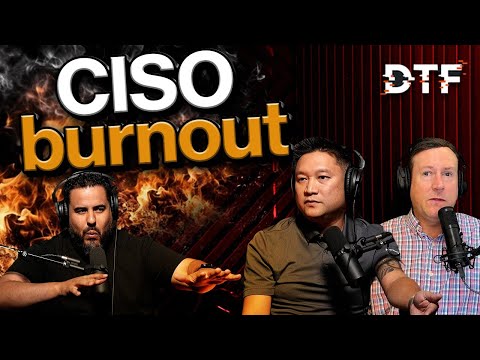
Airlines Selling Traveler Data? Security Leader Burnout!
0:00All right, today's Monday, June 16th, and if you're here, you made it through the massive internet outage last week. Today's topics are number one, the airlines that you used to travel with don't want you to know that they're
0:16selling your information. We're going to talk about that. Second story is smart watches are on everyone's wrist, but there might be some issues there with the actual microphone helping thread actors steal information. Story number
0:33three, it's a sad day for CISOs because a lot of them are leaving their jobs. We're going to talk about a recent article, recent report around that and some insights from Troy himself. All right, this is the DTF Cyber Podcast. I'm Damian. This is Troy. And
0:51this is Fur. Let's go. [Music] Article number one. Let's just pull it
1:06up because I want to make sure I reference the exact things that we're talking about. Before Before you jump into number one, I wanted to touch on last week's outage. you know we we you want to acknowledge the fact just just how interconnected this world is. I mean for those who are well aware what happened of course you know this is not
1:22going to come as any surprise but you know how often do we see one component or one service that fails or goes down that has this cascading domino effect right and I think that's you know we all felt that last week and you know some people felt it more than others there were massive outages where people went
1:37home from work and there were others that were able to keep trudging along but you know always love when these things happen because it really illustrates just how interconnected we are. Yeah. Yeah, I mean maybe that's a topic for next time, right? How reliant are we becoming on technology and then how reliant are we becoming on AI
1:53eventually? Exactly. So maybe something to talk about in the future. There's a lot of people they just they use their chat GBTs and they don't even think about what they're saying and then it's just like man you got to proofre Yeah. So if your systems go down or your AI stops working, does that mean you're
2:09done? You can't do any work? We'll talk about it next week, right? For but for this week. So, this one's actually pretty interesting because I don't travel very much. When I do travel, usually we just drive around. I don't really travel like business travel.
2:24Like, I know you guys travel a lot. Troy's seems to be in the city every single week. New city, right? I know you're always leaving town as well, Damian. So, I I'm probably the one person that stays local the most between the three of us. So, I don't have as
2:41much exposure as I'm sure you guys might with this. But this is interesting because there is a group called the Airline Reporting Corporation. We're going to call it ARC for short. And what's come out is they've been selling information to
2:57Customs and Border Protection, CBP, separate organization, not even related to the travel industry. And the information that is in there outside of people that are interested in it, another group is is ICE as well, right?
3:13very relevant nowadays. If you look at the news with some of the protests going on, things happening in LA, things happening here in Arizona, around the US, there's a lot of people um in situations. We'll just say that, right? So, what I find interesting about
3:29this article is that passenger names, itineraries, payment information, and other things with the ticket sale from the airline to the person is being sold. And there was actually they actually released one of the contracts to CBP, an
3:48older one, mind you, that says, "Don't tell anyone we're doing this." So, I find it interesting because eight of the major I think it said eight of the major airlines are involved with this arc
4:03group. Yeah. And I I don't No, look, forget about who they're selling it to. just the fact that they're selling it, it doesn't to me from a privacy perspective, I have some concerns, right? I've got nothing to hide, right? But I still don't want somebody tracking
4:20where I'm where I'm traveling other than my my family or maybe my employer if I'm traveling on their behalf, right? But I don't know, this kind of to me a little concerning where do we not have basic privacy anymore where the government now
4:37knows or wants to know where you're going? who's paying for your your ticket because I think credit card information is in there as well. Yeah, that was part of it. Yep. So, it was quite interesting though. I think, you know, just to touch on the privacy part. I totally agree. you know, and I take a stance on neither side of this or, you know, I don't want
4:52to publicly take a stance on it, but you know, coming from the law enforcement background, I assume anytime I travel on a plane, a train, or any kind of public transformation that transportation that they're going to share that information with the government, like you get on an airplane, they got to make sure that you're not a terrorist, that you, you
5:07know, aren't on the OFAC list, you know, in fact, barred from transportation like that, and so on. So, I think that we already knew they shared our data with the US government. in this case sounds more like they shared it with the the wrong internal department of the government or whatever. Maybe people are
5:22definitely more concerned about these things today. But I just assumed the government was sharing that kind of data and it keeps us all safe, keeps our air, you know, airlines safe. But I would be a lot more concerned if they were selling this to a private entity that was going to use it to like try to commercialize and sell me something or track me, you know, the way that online
5:39ads might do. So I think uh I'm definitely a lot more comfortable with this. I Yeah, I I agree. Right. There's some safety concerns there. So, I'm not I'm not saying, you know, either way, does it go too far
5:54though, right? I mean, I'm more concerned about can they sell it to other entities where we don't know about we should they be hiding the fact that they're selling it to the government? Um, like you said, Troy, I think we already know that that was happening, right? There's people on no-fly list,
6:10but what about what about other entities? Are they selling them there too that we just don't know about outside? Great question. And we talked about privacy last week and I think it's a slippery slope as you mentioned. You know, what if we're selling this to border customer border patrol? They're using it to, you
6:25know, profile people who they're looking to arrest. You know, is it now going to be shared with other law enforcement agencies that have people they're looking for? Is it going to be looking for people who are, you know, in this country longer than they should be? all those I'm not trying to politicize this whatsoever but I'm just saying it's a very slippery slope with privacy once
6:41you start sharing data like that with these agencies even though they're internal it may cross boundaries of what consumers understand their data to be used for so just definitely something to talk about so just outside of any any politics or anything like that
6:58do we I'm not sure of you know the the airlines requirement to be able to turn this over I mean obviously If the government wanted it for security reasons, sure they they should be able to have it, but do they need to buy it?
7:15So, is that is that an ethical situation where they're selling your information back to the government, is that ethical? It's a great question. Yeah, I think I think the data that they use for the no-fly list, Damian, through TSA and all those things, that is a partnership and I think that that's not
7:31for sale. So, the fact that they are selling this data is interesting. Yeah. So, as I as the consumer, they're selling my information. Shouldn't I get some of that back? Hell yeah. I mean, I'll fly. Look, if you want to give all my information to the government so I can fly for free, I might go for that.
7:46Let me get a free, right? It's interesting that you say that because there's so many companies who are trying to figure out how to monetize our advertising or our preferences online and and us as the consumer get a piece of that some kind of blockchain or bitcoin or token or something like that
8:02where you know all this data every time our presence is used online to advertise to us there's an exchange of money somebody's getting paid for your data so they can show you ads on Facebook as an example you know how could we monetize that so that you as the consumer get a
8:17benefit from your identity online. You know, there's a lot of companies trying to tackle that and it's it's very difficult nut to crack to be honest. That's right. I mean, if your if your information is going to be out there anyways, why can't I make money off it? I mean, criminals are making money off it, so why can't I get paid for it? Well, yeah, it happens. It happens at
8:33the casino all the time. You see people walk in with a with a fat stack of cash and they walk out with their hands in their pocket, but they get a phone call like six weeks later. They're like, "Hey, would you like a free stay?" And it's like, "I would think a free $200 a night, $300 a night. Well, so here's the
8:49thing. It's not just the airlines. Your credit cards do the same thing. I think everybody does. I mean, this is a consumer-driven world, honestly. Uh, you know, if you're not paying for the service, you are the service, right? So, you know, this is a very common thread. I mean, this this particular article
9:05revolves around airlines. But, you know, they always said about Vegas, you know, this place wasn't built on winners. You know, to your point, Fern, people come here and they they leave a lot of money in Las Vegas. That's how we have these nice billion-dollar casinos. But I think that the targeting, it's getting so specific now. If you walk into a certain
9:21casino, they're they're to toying with technology that can actually show you your favorite game. They can change the game in the glass from Wizard of Oz to the Wheel of Fortune because you like to play it. So you'll sit down, you'll spend money. So behavioral analytics and advertising is a big big business. And I
9:36think that this is just another part of that. Well, why not? They're just all computer screens now. So everything can be customized to you, which you know, it's great convenience. I mean, there's I'm waiting for the day where you just walk into the coffee shop and your app already knows what you
9:52normally order. So, you don't even have to open up the app or order. Just walk up to the counter because it already knows you're coming. Yeah. Could you imagine though? Like, you go to the casino and it's just like a bunch of people playing the Buffalo game. Buffalo. And it's like, well, why? It's like
10:07because this is my favorite game. And then like the casino's like, yeah, he loses all the money on the Buffalo game. So, we make sure we present it with the Buffalo game first. But, so, so I guess go back to the other article or the same article is what I find interesting about
10:22it is there's actually a loophole here with the fact that these airlines are kind of coming together to form this ARC group, right? So, they have access to this data. They're providing it to ARC, which is a separate entity of sorts, right? And what that then becomes is not
10:42the airlines selling it, right? Because they're not. It's ARC. But now ARC is essentially falling under this into this category of a data broker, right? So they are now a legitimate data broker source, which is essentially a loophole
10:58to any legal ramifications to the airlines directly. So that's to me what is what is extremely interesting because it's not like Southwest is doing it. Arc is doing it. Yeah. But they're getting the data from the airlines. So the
11:14airlines are selling it to the broker. Well, the airlines are they're I don't know if they're selling it directly to ARC, but it's almost like a group. So ARC is essentially this group of other entities, right? So whether they sell it or not, ARC is now being sold to sell to these government entities. So maybe
11:31they're passing it along. It's not very clear in the article. Maybe it's something to look into. But from what it looks like is the airlines provide it to ARC. ARC then sells it to CBP. So and the way that works is ARC works in a way to where the airlines aren't directly selling it to CBP. So I wonder if
11:48there's like a way you can do an add-on, right? Don't sell my data and you got to pay an extra 50 bucks for like when you license music on YouTube. So, like on our first couple episodes, we used an actual song in the intro music and then
12:04by episode four, we got caught. We started getting actual actual viewers and actual Yeah. Well, I wouldn't say we got caught. We just the the because the music that I used was a free licensed version, but it sounded very close to the original. I think that's what set it
12:20off. But so very similar like we were using that music. I didn't pay for it, but I got it from a source that said it was free because they they've essentially remade it and it was a free thing. But then they're like, "No, it's too close to the original." Um, but with
12:37music, right, like Sting gets paid, forget how much it's like $7,000 a day to to from some of the music he's licensed to other people. So, here's a here's an an interesting concept. Every
12:52time somebody a telemarketer calls you or a cold caller calls you, shouldn't there be a fee? Like, hey, if you want to call me, you just want to ring my number, it's like $5 number. That'd be nice. So, there is a company that actually does that. Now, I don't know if
13:08you guys have heard of it, and not to give them free publicity, but there is a company out there, I won't say who they are, but essentially the way that they work is they they attached to your Google account, and whenever you get a message from third party like seller or
13:24some company, you can send them a reply, like auto reply that says, "If you're interested in my time, you have to pay to get it." And what they do is it's a marketplace now to where people that could be sold to have
13:40a rate that they charge for people to pay. And the whole business model is if you're going to spend hundreds of thousands on marketing, why not spend hundreds of thousands and get directly to the people? And so they're they're paying these executives or people in this company or people that work for
13:57companies a dollar amount to get their time. And the whole idea is you're not paying for the time, you're paying for a response. And the way that they sell it is if if you're providing the money to talk to the executives, the executives owe you
14:14an answer. And that is whether they're interested, they're not interested, but it's a a worst case scenario, it's some form of critique to help you re-wizzle your marketing messaging. So, it's kind of like a weird world where people are
14:29paying for someone else's time. It's not a bribe. They're paying for a service and that service is input on their messaging and if their messaging is already good, they might be interested in buying, right? So, it's kind of like quasi what you're saying. Yeah. I mean,
14:45that's a gray area, too. I don't know, Troy, how many times you get offered? 100,000 times. Yeah. Yeah. Here, here's a gift card. Take a call. See, I don't do this. I don't I don't do Yeah, sure. Unless it's a company or somebody that I know and trust because, you know, I love
15:00to give my time to hear pitches and startups and so on, but you know, these you we get thousands a day, you know, offers of $50, $100 AWS gift card, whatever it is, you know, or Yeah. Take a call from us. You see this on LinkedIn, take a call from us and get a free AirPods. Yeah. Yeah. You show up to
15:16a meeting, AirPods, and it's like, open up your backpack and there's like 10 AirPods in there. Like, what are you doing? Like, do these. But the thing is though I got to on the other side of that coin is like I said before I'm very you know the amount of work that vendors have to go through to get your attention. I don't to complain about
15:32anybody but you know I don't think some of these tactics are appropriate and I think Damian you just touched on one of them where you're just so I mean we're talking about airlines airlines selling our information but we know that there's data brokers out there that have already gathered who we are where we work and
15:47maybe even technologies that we use today. So this goes beyond just the airline. I mean I you know you know I always thought I always thought it would be very in you know easy now you know now that we're on the you know voipe you know voiceover IP rather than the old plain old telephone lines pots lines you
16:04know when when phone lines were copper you know anybody could plug into a copper line and and have a tone and go out and make a phone call but now we're over the internet it should be fairly easy to require every person who has a telephone number to register that number to themselves you know and have an identity that's tied to a phone number
16:20and let's just say if you don't have that verification ification or certification, you can't make a phone call. That would stop every single spam, scam, you know, all types of calls. If you can't get a phone call because that person hasn't validated who they are on the other end, I mean, that would be the easiest way to solve this problem. And,
16:36you know, that's just my my thoughts. Why haven't we done that? Well, not not that that's in place, but there is something coming right around the corner. I don't know if you guys saw this, but I now have an iPhone, trusty, dusty iPhone. I have Apple Watch. I've got everything Apple, right? Mac,
16:52everything. I'm in the I'm in the ecosystem, right? And it's awesome because let me tell you, so people who don't who don't know you, this is recent, by the way. This there was a time where I'd have to I was green. Text text him in green. Now he shows up as blue. So yes, on December 25th, I made
17:10the transition to Apple, right? And I All right, whatever. I've had Apple in the past, but then I got it. And then I got the watch. Now my kids have the watches. They can call me. It's really annoying. They call me like they're just in the other room and they call me, right? So
17:25another story for another day. But I moved into the Apple ecosystem and I'm like screen mirroring on my phone on the Mac and then I'm like using like five fingers and doing these things like this trackpad is crazy. So I kind of feel like welcome to 2025. All right. Now,
17:41they just announced it at WWDC 25 that iPhones will have a way to gatekeep all the calls that aren't in your phone. And so, instead of you getting a a call, you know how you can have the setting to silence unknown callers, now they're
17:58doing it with iOS 26 where any essentially a cold call is being kept from even ringing your phone. And it'll say, "Who are you?" can provide a reason for your call and we'll let the owner of the phone determine if they want to
18:14accept your call. Very so very similar, but instead of having people be required to have a certificate to call, it's allowing the end user to accept the call or not before it even rings. So there's
18:29and what's interesting about that is so there's all these data brokers, right? There's Apollo, there's Zoom Info, there's Seamless, there's all these companies that make their money off of selling your data, right? You pay $15,000 a year for a license to call anyone you want. And you know, people
18:45like, "Well, how'd you get my number?" Like, "Oh, I got it from this platform." So, what's interesting now is a lot of people are talking about how they're going to even make cold calls anymore because I don't know about you guys, but a lot of people that I've met that are at an executive level tend to have an
19:01iPhone, especially in like the security world. So, it's like everyone in cyber security has an iPhone, right? When this feature goes live, Fern, I mean, everybody has an iPhone because that seems like pretty. Did you say iOS 26? Which iOS are we on now? I have I've
19:16lost track. Yeah, they they they with the new version they're going to the year. Yeah. Yeah. So I think I think they're on or they're on 18 right now. So like 181 or something, but starting not this month, not I think in July when the GA for iOS 26 comes out because right now it's just for beta developers
19:32to use. So I think next month in July or August. So that's why I said it's around the corner. Everything is streamlined or normalized to the year. So the Apple watches, the Mac, the iOS, anything Apple will be 26 plus. So then next year
19:48will be 27. I thought I was way behind on security updates there for a second. I'm like, holy cow, we're already on 26. I'm in trouble. Like like small heart attack moment where you're like update update update. Um yeah, so that just came out. I don't know if you guys have heard
20:04about it, but there is a there is a lot of talk in the underworld of the sales underworld where I reside of people saying, "Hey, how are we supposed to call these people anymore if if their phones won't even ring?" It's like, I don't know. Sorry if I'm
20:21not sad. Sorry, I'm not sad that my phone's not going to ring from cold calls. You know, we've got to find a better way to engage with our customer base, period. And it's not cold calls. They don't work anyway. So yeah, sorry folks if if you think cold calls are the way to go. It reminds me of a lot of times when people say
20:37it's a volume game, like you just got to keep trying, keep trying and eventually you'll hit like playing the lotto, like okay, I just keep playing and eventually I'll hit it. Like maybe, but in the world of like sales, like once someone has your cell phone number, your phone is just going off all the
20:53time, right? And so there's always, well, how do we get better messaging? I don't know. So that it's like the chicken or the egg. Do you do you invest in better messaging, maybe like organic socials, dark social channels, or do you go through just calling someone direct
21:08hoping they they're expecting their car dealership to call them instead or expect that they're between a meeting? That's that's the thing, right? So, for me, I I don't accept any of those unknown numbers, but once in a while, I have to take that off because I might be
21:24expecting a phone call from a number I don't know where they're calling from. And it really makes me upset when I'm vendor. I know. Yeah. It's like, so, you know, guys, you guys know with my truck, right, the transmission went out, so I had to take that setting off, but I I
21:40forgot to do it. So, then the the body shop or the the people that have the the truck now. They tried to call me like four times in a row. And I'm here. I am thinking like, man, I wonder if they have an update for me on my truck. It's like then I look at my phone, miss calls, and it says like I don't have the
21:57the shop number. So yeah, I fell into the same situation. Thought it was a little interesting, but you know, Fern, we talked about cold calling. So I get the question all the time, you know, what can I do to to get traction? How to get this the attention of a CISO? And I heard a really interesting pitch this
22:12morning, which I thought was fairly unique. And I hear a lot of pitches, I got to be honest with you. But this company, this company is actually targeting startups who are just getting started. and their whole business model is helping them get that initial traction to get those first 10 customers, 20 customers, whatever. I I
22:28won't say any names here, but if you're listening, if you're curious, give me a LinkedIn message. But what a what a very unique way to do that where you're just brokering relationships. That sounds like a cool idea. I've heard of that one, too. No, it's like you're brokering brokering relationships, right? And you're bringing people together. But the
22:44one gap in the whole sales market is helping startups get their first 10 customers, helping startups get their first 20 customers because those are the most important customers of any startup. The VCs want to see traction. They want to see their companies that they're investing in, you know, getting to a viable product and the startups are like
23:01doing anything and everything to get their word out. So thought it was very unique to see a company focused on that particular segment of the market. So sorry to interrupt on that. Back to you know the talk at hand. Another fun fact before we go back is that Vegas does not have a lottery. You mentioned lottery earlier. You have to drive to California
23:17or Arizona. They have no lottery in Nevada, which is interesting. So, wait, you can get down on sports betting, but you can't you can't throw a random five at an at a ticket. No, you got to drive state line. What? Yeah. No Powerball, no
23:32Megaillions, nothing. So when it goes really big like over a billion dollars a couple times it has I had to drive over to you know Arizona. I don't go to California because that one is just mobbed. That one is crazy. It's a little bit closer but that that one is crazy. So you know what you do, right? You just
23:48put a gas station at the border there. Oh, there is. Okay. There's Yeah, on both sides. Here I am thinking I'm a genius. Someone else has already done this. I didn't know that. I guess I've never I So, here's the thing is my wife likes to play the Powerball, but she
24:03never picks it up. I have to be the one to go spend four bucks or whatever it is. And I'll do it maybe once a month, maybe once every few months, but she only does it when it gets to like 200 million plus. And somehow I justify the drive because I'm like, "All right, four
24:19bucks to win 200 million." Like, yeah. But then we never win. We never win anything. Well, what what's the amount? There's a certain amount where it's positive EV. I don't know. I mean, it has to be over anything over 300 would be worth it, right? Well, I don't know what the odds are. Even if it's like 700
24:35million to one after Oh, really? to get positive EV. Really? There's no there's no plus EV before. That's a good number to check. So, so at at So, here's a interesting thing. Table games, right? They there are table games where you can put $5 on a bet. So, it can be. So, $5
24:54is is at a very specific casino where they have new tables in the poker room. Okay? And I can't tell you how I know this, but I know, man, maybe I'm there. And so, they have $5 minimum bets, right? But the only thing that they pay on are
25:11if you get three in a row. So a straight flushes don't count a straight flush. So three consecutive of the same suit or three of the same number. So triple eight triple 7 any triple or any
25:26straight any consecutive set of num or cards. Right? The odds for that are point three or 03 of a percent. It's like one out of 400, something like that. But they're not paying 400 to one odds, right? Oh,
25:43never. So if you if you spike this, you get 50 bucks. So you're going to play 10 times, you're going to dust off $50 and you're never going to win. But they they set it as, oh, you can make all this money. So no, that's that's always the benefit of
25:59house. Yeah. Yeah. So, I guess going back to casinos, maybe we should do like a podcast episode on casino games on that. Sorry to take us off track. I didn't mean Yeah. Yeah. Take us on rap. No, it's, you know, I think we're right on track because we're right around the 20 minute mark. But it is interesting how, you know, one conversation about
26:16your data being sold, right, can lead to these other areas and other situations that it almost like permeates life regardless of what you're doing. Like a story can kind of, I guess, through osmosis into other stories. Yeah. Well, so bottom line, I mean, if you're
26:33shocked that the airlines selling your information, there's other people, other companies collecting information on you, probably selling that. Yeah, exactly. And I guess the one thing that you should always be aware of is maybe look at the tech that you're wearing because that leads us right to the next article
26:49is it doesn't say which watch manufacturer and if it does, I don't want to say because I don't need anyone ringing my doorbell, right? But there we'll have the article posted with with the episode and what it said is essentially
27:06it's called smart attack. Okay. And with smart attack what it's using is actually the microphone in smart watches blanket statement no one specific that it's picking up signals from a a PC
27:23right through a certain frequency and you can't even hear it. So it's not like if your computer's like old and dusty like a gaming PC or like a old PlayStation is sitting in the corner. It's just like humming along because it has no air circulation. Not that. So
27:39this actually falls in the inaudible range for humans. So 18 to 22 kHz, right? So and what it does is it takes that which that information could have keystrokes, encryption keys and
27:54credentials. So wait, are the computers emitting this by default? Let me see. Or do you need to have software on there? Well, they they should be um so I give an example, right? So you talk about air air gap systems where you
28:11think there's no connection to the outside world. There's no internet connection. Everything is in a bubble. And that's how a lot of companies protect secrets and confidential data. Uh there was a research article happened a couple years back where they were able to actually decode a lot of that just by uh viewing the blinky light on the hard
28:27drive. And so it's not that it's necessarily a software program or keystrokes or things like that. It's just the way that these parts operate and send off signals. They were able to decode some of those very important secrets. And so to this article, what I was reading is that it's like, you know,
28:43the smart watches were able to pick up certain frequencies and decode either keystrokes or actual, you know, information being transferred back and forth on the wire. So, uh, I would just say to this article, I don't know any place that's a, you know, air gap system that allows smart devices, period. I was
28:59going to say that because check your phone at the door, you have to walk on this very important anti-static strip. That's a piece of tape that you step on and takes all the static off the bottom of your shoes and you have no phone, no watch, no anything that emits really possibly emit. Yeah, I so I I agree with
29:16that because I've gone into highly sensitive areas. One of them may have been a government building where they you're not allowed to bring your cell phone, your smartwatch, or any electronics with you. And I've also been in a major car manufacturer
29:32facility and same thing you're not allowed to bring your your smart devices in that facility. Did I include smart watches? So anything that's airgapped properly should not have people wearing anything your smartwatch. So the article does clarify right that the malware has
29:48to be present on both ends. So the air gap system and also on the wearable device in this case the watch. So yes, to your question earlier clarifying it's not it's not one-sided. It has to be on both. But how does it get to both?
30:05Someone possibly wearing something they're not supposed to into this room, right? Did you guys see the Ed Sn Edward Snowden movie where they u you know the there's been several, but the one that was like a Hollywood production, he actually snuck out a USB stick on a in a
30:20Rubik's cube. And so that just, you know, goes back to the deception that's involved in trying to sneak something in or out of a airgot system. You know, they usually have X-ray scanners. They have these certain detectors for electronics as you go in and out of the facility. So it' be very interesting to see, you know, how they do that. But
30:36insider threat, as in this case, you know, anything's possible. And by the way, if you have physical access to a system, it's just a matter of time before you can compromise it. No matter if you have the passwords or not, there's so many tools and techniques to get access to a system if you can put hands on it. Yeah, I've I've never been into one of
30:53these facilities, like a government facility. I've never So, I've never I've been into data centers, but they've been locally run within an organization, right? So, like some companies had a data center on site. You just kind of walk in, right?
31:10It's a sales guy just walking in. Apple Watch, I didn't have Apple Watch at the time, but like I presumably could have, right? And no one stopped me. So when you guys say airgapped that's a very specific case right. So are the is it is there a concern with
31:28a data center that's not it has you have say you have an air gap portion of your data center but your traditional data center is there anything around allowing third party people into those rooms obviously not like unguarded but should
31:46that just be eliminated completely or like should I have never seen that those data centers like where some people are like Hey, check out this new server or hey, check out this. But you see it a lot on like LinkedIn where like a manufacturer will sell like a bunch of servers to a client, right? And they'll
32:02have a nice shiny rack with like the logo on it. Yeah, but come on. Have you ever been to a real data center? How it never looks that clean. No, I know. But that's what I'm what I'm wondering is like is there is there a concern around that? Like should people kind of take a second step and think about their
32:18practices around who they allow vendor or not? Absolutely. Oh yeah. Yeah. No, I mean it's you have to be in full control of who goes in there, who sees the equipment because it's not just showing off, you know, racks and racks of equipment there. There's risk in having
32:34people come in there. I mean, what if they accidentally trip on something and pull out some connections or, you know, we always joke about, oh, you know, maybe last week's internet outage was was because somebody need to plug in the coffee pot. There's no more outlet, so they unplug the That's so true. So that
32:50we joke about that all the time. So that has to be controlled. You can't just walk people through, you know, something that might be critical for your organization through a data center or to I was going to say I find interesting is that, you know, I take for granted the
33:06fact that you and I may work around this stuff every day, but there's a lot of people that may not have been in a data center. So when you go in these places, the security that you have to go through to get into the places is quite extensive. You have to be on the list to attend. you have to, you know, go through metal detectors, but this isn't an air gap system. This is a data
33:22center. So, you can take a laptop in because a lot of times you have to work on something that's in the data center. You go in with your laptop and all your cables and you usually get to your particular racks, which may be amongst other customers racks. Yours are locked with a key. You open your your server closet. There are even some companies
33:38that rent out specific sections of the data center. So, inside the data center, you can have your own fence and your gate. Yeah. Either mechanical or lock. You go in there, you close door behind you and inside those locked gates, there might be even another locked gate where it's just for super admins to go in. So
33:53these places are very interesting to go in and work around. They're extremely noisy. They're very cold because they have to keep them cold for the servers. Uh and so it's just really interesting place to be. If you've never been in a data center, if you have the chance to go to one, take it because it's a very interesting tour to go through to see
34:09the power that goes into powering these things. the to go into the different type of fiber hubs that have to come together so that everybody has connectivity and not to mention the number one cost at any data center cooling keeping the data center cold for these uh servers is absolutely critical and expensive but I mean it's not just
34:26data centers that are airgapped right there are facilities that are maybe just an office where there's physical pictures and designs on on walls and things that they don't want you taking pictures of right or listening into conversations,
34:42recording them. And so a lot of these airgapped rooms, they don't have to be in a data center like Troy's describing, you know, and I've been in a lot of meetings where they're they're looking for any any electronic device. And so you're not allowed to bring, you know, they tell you, leave your watch, if it's
34:58a smartwatch, leave that in the car. Leave your smartphone in the car. Yeah. I I've never been to the only air gap systems I've ever been to outside of data centers. You know, data centers are pretty much come and go. there's technical controls around it. But air gap systems are truly those, you know, bio pharma, you know, air gap systems
35:15where you're not allowed to bring anything. Uh, you know, these technology rooms where they're building the next iPhone or television. I've been into those rooms where they're physically designing Samsung telephones. Those are air gap like they literally search you, pat you down, no electronics in, no electronics out, you know, those kind of
35:31things. Those are the air gaps. Military, high-tech, bioarma. Those are where you find those air gap rooms where no technologies are allowed no matter what. Yeah. I went to like, like I said, a major car manufacturer and they had designs of their next model car like
35:47actual models and everything. So, they don't want that to get out at all. No pictures, no recordings of what what potentially could be coming out. Pretty pretty interesting, right? Definitely want to keep those under wraps. Yeah. It kind of reminds me of like the cigar bars or the not the cigar bars, the How
36:02does how does that remind you of a cigar bar? That's so funny. So, so I tell you a story, but there's a place out here called Wolf and Ren or Ren and Wolf, one of the two. And they have this special room called the Champions Room. Have you guys Have you Have you heard of this place or No? I've heard of it. Never
36:18been. Okay. I've been Okay, I got pictures. So, here here's what's crazy about this place is this is like the air gap version of a whiskey room. Okay. And I've noticed a lot of people in cyber security or just say security in in
36:33particular, they always have whiskey events, right? So this place, it's essentially like a speak easy where you have to go to the restaurant and you go to the back corner of the restaurant and there's people literally sitting at this table eating and you kind of walk around them and there's a curtain that they
36:48pull off to the side and there's a door. They open it right inside this door. Imagine like a mahogany mail room. Oh, I've been there. This is Yeah. And they have they have chandeliers made out of bullets and there's bullets on the wall and it's just bullets everywhere and an entire
37:05wall probably 20 feet long is hundreds of mailboxes made out of wood. drop in a key. You or you open the box, put your phone in, close it, take the key with you, and then you walk just down the hall on the corner and there's
37:22another door and you walk in and it's just full on bar that you can't take any device into. So, I think that's more for show. We Troy and I went for dinner in Las Vegas. Similar thing, right? No pictures, but uh remember Troy, we were
37:38taking pictures and we got in trouble. Actually, one of our friends got in trouble for taking pictures of us. Yeah, that was good. Was it because they had the flash going? No. No. No. No pictures. They don't want any pictures in the restaurant. Which restaurant is this? Can't say. No, we'll take you there next time. Okay. This is
37:53interesting. This reminds me like the dinner that we had a few weeks ago. We're like, "Oh, do you want me to bring my camera?" And you're like, "No, don't be weird. Maybe someone wants pictures. Maybe." Okay. Well, I guess we kind of got off track, but that's pretty typical, right? So, go Yeah. And I think
38:09going back to the main point of the article with the air gap systems and the smart watches, you know, interesting article, very fun read, but I don't think it's realistic because no systems going to have No, this is what I would take from it, Troy. This is what I would take from it. It's okay. Smartwatches today, but I think you have to remember
38:24that almost any electronic device would have malware on it. Yeah, any any electronic. And so just keep that in mind if I I think this article just brings that to the forefront of you know what are you
38:40installing on your home network? Is it that camera from China that might have ma malware built into it already? Yeah. Right. Because we've seen a lot of that with a lot of more more technologies coming up in home automation. You know at what point is your home going to act
38:56against you? Maybe just lock you out of the house completely. Yeah. Yeah. We have seen a few of those things. I will have to admit you when you were looking at a $1,000 vacuum to vacuum your house when you're asleep and then you see a $300 version on Amazon, you're
39:13like, "All right, I'm going to get the $300 one." And then you get it and then you went you like, "All right, give me get the application on my phone." And then it's in characters I don't even understand. Well, see, here's the point, right? You're like, "Oh, I'm saving a bunch of money." But what? It's just a vacuum. It's just a vacuum. So, why am I
39:30worried about that? It has to connect to your home network. Well, you got to install the app. So, now you've got maybe malware on your device and then you have this, you know, piece of equipment running around your floor is listening to everything that that you're saying. So, I mean, that's I think that's what I would get from this article is that just remember everything
39:46is electronic device that's connected. Even my fridge tells me that, you know, it's time to change the water filter. So, I don't know. Go back to the whole data people selling your data. How many times is my refrigerator company telling
40:03me like keeping track how much water goes through that system and how many times I replace the filters, right? And selling that to Amazon so Amazon can automatically remind me to buy filters. It's a whole it's a whole it's a whole scheme. It's a whole scheme that we got to find a way to get on the side of,
40:19right? But I you know what what this makes me think of is there's a lot of stuff that people have to worry about which probably means there's a lot of people in security that feel like they're losing their mind. Which is interesting because on the next article
40:3553% of cyber department leaders have binoculars looking for their next job. Right now, I might happen to know a couple people that are in transition right now.
40:52I just got a text the other day from someone saying that they're no longer with the company that they were at before. Probably see them next week potentially, right? So, they're not in that role to take some time off for the summer. They're going to be looking for their next gig. I I can kind of understand that people
41:09get burdened with with the requirements of the role, but I want to hear from you guys. High pressure industry, right? Right, Troy? Yeah, I was going to say I think it's a little interesting that, you know, taking it out of that context of just looking for your next role that I
41:25mean that's always kind of been the CISO is a 36-month role for most people. Average lifespan of a CISO is three years for many reasons. I won't get into those and be accusatory, but there's a lot of reasons. But what really concerns me is the number of CISOs and security leaders who are pivoting out of security
41:42completely and doing something in a different industry or getting out of cyber security. And it's really in my opinion, I've heard a lot of feedback from a lot of my peers that, you know, the regulatory pressure on those folks like Joe Sullivan and Tim Brown over at Solar Winds and, you know, just the
41:57extremely difficult role to do. So you have all the responsibilities. In other words, the uh the SEC is coming down on you. All these compliance folks are looking at the CISO why you're not secure, why you're not compliant, why you're not doing things. When in fact, as I said last week, the CISO has very
42:14little ability to push the button to do it. They can be an influencer to the CIO and tell them we need to improve our security by deploying this technology or patching faster, but that's not the CISO's ability to actually do. So the CISO gets the, you know, the wells
42:29notice as Tim from Solar Wits did, gets hauled in court because he didn't, you know, do his job, but at the same time, there's people on the other side of the the table who don't care and and aren't deploying the technology that the CISO, you know, is advocating for. So it's it's just a very stressful job in that
42:45way. There's more personal liability that's coming about. There's more regulatory liability for the CISO personally coming about. And so CISOs are like, you know, I'm gonna probably go fishing in Montana for six months and figure out what I'm going to do next. And so that's or leave security altogether. I've seen CEOs go and open
43:01restaurants. Yes. They open run a restaurant. A bar. Yeah. So So you guys I I thought he was kind of just what's the not hyper really, but like maybe like oh they're just gonna get out something else like Well, let's be clear. They're not going to be Bob Ross, right? They're not sitting here making happy clouds for for money, right? These
43:19are people that have if they I just want to be make sure I'm clear when they get out they've already been in this role for 10 20 plus years. So essentially what you're saying is they're tiring early. They're not in their 30s. They
43:34just got a CISO role and then decided to quit and go open a restaurant. Or am I wrong? Like is it is it are we I've seen the whole gamut, right? I've seen folks retire early. I've seen young people leave the industry. I I know a guy who left a very large social media platform
43:50and just completely went on to farming because he was taking on too much responsibility without any assistance. And I think that's going to continue to be the crux of the problem for a lot of CISOs. And you know, the job is hard. Long hours, you're on 24 by7. Your phone is never off. Even when you're on
44:05vacation with your family, you could be across the world, you're still you're still on for those type of calls. So, you know, it's a high stress, high pressure job. sometimes very little thank you because you never get thank for the breach you don't have right I mean yeah just do you just don't and so it's a it's a difficult place so you
44:21know my my thought is to say and I I say this all the time to business leaders to CEOs to CFOs you know lean into your CISOs they're probably one of your best technical resources they're going to advise you about you know cyber security and mergers and acquisitions they can give you strategy on which way your
44:39business is going to go from a product perspective you know they're they're great resources And then sometimes we get thought of as a technical resource that just goes sit in the corner and if we need a new firewall, we'll call you. That's not the way to use a CISO. These are business leaders, not technical leaders today. And acknowledge them. Yeah, they should be. Yeah. And and you
44:55should acknowledge them, give them time and space and understand what they're going through. And you know, we have so many employee assistance programs out there for our employees. You know, I just don't see the CISO either using it or being included in some of these really important programs that they need. Yeah, I do. You know, to your
45:10point, I I do have a lot of friends that have reached out and and said, "Look, I I can't get whatever it is, enough budget. I can't get enough resources. I don't think I'm being set up for success. I'm not being respected where I'm at." Yeah. And so, I'm looking for a
45:25job and and I get I probably get at least one or two of those a month where they've asked me, "Hey, do you know anything?" But I can't really say, "Well, you know, this person wants to leave. Go try that place." Because they may not be in a better situation. Right. From from what I'm understanding. Yeah.
45:41Yeah. So like you might leave one role because you just want them to leave and you go another place and then you realize that nobody on the security team reports to you potentially. I've seen that you know the CISO is only responsible for compliance
45:59but not the actual technical aspect of security. Yeah. So, it's like you kind of the grass is greener, but you kind of show up and you realize it was just spray painted grass, right? And it's still it's still all dead on. Like they there actually comes out that that spray
46:15paint. Yeah. But you're also not allowed to plant seed or water. Yeah. It just looks pretty, right? Yeah. Yeah. I I don't know. I've never like I've never been a seesaw, so it's interesting to hear that there's there's still a lot of places. So, let me ask
46:30you this. This really only falls in like the enterprise space a lot of times, right? Because mid-market and small business definitely usually don't have a CISO. Well, they'll have a head of they should have a head of security whether that's I mean I've seen it all from somebody being internal to you know these virtual CISOs or fractional CISO
46:47in my tire. So, so that was going to be my next question is because usually small business mid market don't necessarily have the funding, right? Or maybe maybe it's not even funny. They just don't have the priority to put security in a certain position where they fund it properly. So, they may not
47:03have these security leaders in these roles, right? So, they go out to these MSPs say, "Hey, what do you guys have? We have oh, we have for a fractional CESO." So when Troy mentioned how a lot of people leave to do something different, I've personally noticed there's a lot of
47:20people that I know that are getting into fractional roles, fractional marketing, right? Fractional revenue, right? Like CR like fractional CRO, fractional security from Okay, so from two sides of that one, if somebody's leaving to do
47:36fraction fractional jobs, you're just compounding the problem. So I don't see that happening. Because instead of being responsible for one company, now you're responsible for five. But are you really responsible or Oh, if you're going to be the if you're going to be the CISO,
47:52absolutely. You got to be responsible for their security program. Oh, okay. I've never hired fractional CISO. So then in that case, you wouldn't I I would say, look, if if that's the case, you want a fractional CISO, but they're not responsible for security, then you don't want a fractional CISO. You want a consultant, right, that's going to
48:08hopefully give you advice and and do what you tell them to do. But if you're going to carry that title, the fractional CISO or virtual CISO, you're going to have to be responsible for that company's program and their security strategy. So like all these MSPs that
48:23offer fractional CISOs or even like some of the large resellers that have a VCSO service, are they taking the responsibility and the burden? They should be, right? because there's going to be there's going to be certain liability unless the the definition for
48:39them is not a true CISO. In that case, I wouldn't call it a fractional or VCO. I think that's exactly right, Dam. I don't think it's what is, you know, under contract, that's not what it actually is. They call it that as a title. But, you know, to Fern's point, I think the larger the company and especially if they're publicly traded, that's where the SEC has real teeth through the FTC
48:55to come in and go after the CISO legally. So, these publicly traded companies, yes, there's going to be a lot of pressure for these guys. But as you get down into the small and the mid market, it's a little bit of different pressure, right? A lot of times you have a very shoestring budget and you're just trying to do the best you can with what you have. And so I think uh smaller
49:12business security leaders, they may not have the title of CISO, they have it even harder because they're trying to make things work on a shoestring budget and tie things together with, you know, tinfoil sometimes. But, you know, kudos to them for continuing to try. It's a high pressure job. So, you know, the
49:27smaller enterprises that do use fractional sort resources, you know, it's a great idea, but they're just consultants at the end of the day. If you have a ransomware attack that's going to take your systems down, very unlikely that that fractional CISO is going to carry any of that liability on themselves. They've probably signed that all over back to the customer. Well,
49:44here's you also need to have a separation because if you're hiring that fractional CISO from the company that you're getting the security services from, there's there may be a conflict of interest. Yeah. Right. because they can't hold their own company accountable. And so that's just one
50:00thing to look out for. If you're gonna be hiring like a fractional cease or consultant, just make sure there's no conflict of interest. Yeah. Which would probably be purchasing product from from the company or purchasing product that only that company sells.
50:17Oh, okay. Right. So here here's the tricky part. Like if you are looking for a new tool in in a certain space and you only go to one vendor and they only know a set of tools, then you're not getting
50:32the full story. Mhm. Okay, I can see that. So it's like you layman's terms, if you have a BMW, you don't just take it to the Honda repair shop. Oh, if you're going to buy
50:48a new car. Yeah. If you're going to buy a new car and you walk into the BMW dealership, all they have is BMW. Trying to buy a Honda, they're probably going to say, "Oh, no, no." Or a Mercedes, they're probably going to say, "No, yeah, here's a better car for you." And they're only going to show you what they know, right? That's not their fault.
51:03It's where they're exp. That's why you got If you're going to buy a car, you got to go to carvana.com, right? Duh. You're going to buy a used car because they have everything. It's not like they're limited to just one. But I've never bought a car through Carvana, but I do have I hear they have a fantastic C7. Yeah.
51:22Shout out to Dina. Shout out to the one and only Dena Matt. Um my brother actually bought a car from them and they he bought a truck and there was a couple things with it that he's a mechanic that he found, fixed it, and he was just like surprised because
51:40like I just called him up and said, "Hey, this is what I this is my issue. They sent him to a body shop or no he had to send the body shop send his take his car to the body shop and they got actual quote sent it to them boom like fixed. I'm like really like yeah all right cool next time I'm going to get
51:57something used although I think they're selling new now I have to double check but I think they're doing something new. But back to the CISOs leaving right stressful job. You're never actually unplugged. You're probably at dinner. Your watch is ringing now. So here I'm
52:13not a CESO, right? But when I eat dinner now, I have to turn my Apple Watch to theater mode. So I just hear itz all the time while I'm eating dinner. And before I would always check it like I would look at, oh, okay, this is happening or this is happening. My wife told me, can you just like turn it off?
52:30Cuz like someone would be talking and then I all of a sudden just like look at my watch, right? So I imagine it's like that for you guys more so, but all day long, weekends. So the grass isn't always greener. So if someone's looking to get out of
52:46their role, what's like what's the best way like it consulting because VCO has the same responsibility but now you've compounded it to multiple organizations that mind you are probably at different stages in security maturity. Yeah. So consulting is to me
53:04right this consulting piece is different than the VCSO. I think if you take the VCSO title, you're responsible for the security program, but you can be a you can be a consultant advisor to a CEO, right? So follow-up question,
53:20not everyone in security should be a CISO. Oh, not everyone in security should be in security. Take that one. So in that case, there might be a lot of people with a title that isn't aligned with
53:36their skill set. Nothing wrong, right? Nothing wrong with that. It's just that maybe they don't have the full scope of what the role requires. And maybe that's part of the reason why they're inundated with issues is because
53:53there's a high percentage of people that just don't have either the technical side or maybe the compliance side. Right. No, I don't I don't think so. I think Yeah, I don't get and I don't want to speak for Troy, but I think it is a high pressure job. So, even though these
54:08people might be enjoying what they do and they're very good at it, it just becomes, you know, maybe a point in your life where you're like, why do I want this pressure to be, let's say, an operational CEO, right? Yeah. Yeah. And I want because there are other CISOs out
54:23there's a lot of program. There's a lot of CISOs that, you know, they don't want to admit burnout, but burnout happens to a lot of CISOs and it happens very quickly because of all the pressure and this stuff and, you know, I've only worked with people who are excellent operators. You know, that very few CISOs that I know that I would say they don't
54:39need to be in that role because they don't have the technical or the business acument. But I think that CISOs are afraid to admit that they are experiencing burnout. So, we have to remind ourselves and I want to, you know, tell all CESOs or any security leaders listening. It's like pay attention to your body. Pay attention to
54:55your breath, yourself, your stresses. There's there's a gentleman who started running marathons. He tells a really good story about how he tracked his health over time. He almost died. He had a heart attack, almost died, started running marathons so he could live longer. But the same thing when I was a police officer. Police officers don't have a long lifespan after retirement
55:11because of the high stress of the job as a police officer. CESOs are going to experience the same thing. So you have to pay attention to your body, to your heart rate, your stressors, your blood pressure, all those things because you know um after work you need to be with your family. You need to find something
55:27that you love. Be passionate. I love golf. That's my outlet. Like to go on the golf course with friends and just let my mind turn off for a few minutes. And you know sometimes you can't do that because the phone's always ringing but try to find coverage. Somebody who can watch the wires for me while I step away. I think all cases and security
55:44leaders to have that outlet, you know, spend time with your family, do something fun, get away, find someone to cover you for four or five hours and turn your phone off. That is a scary moment, but at the same time, it's so refreshing after you do it. So, please, you know, security leaders and CESOs,
55:59take that time for yourself. Yeah. Or go have whiskey and cigars on Fridays at a very special place. Undisclosed because I don't want to Yeah, we can't talk about the secret
56:15spot, but it exists. Um, yeah, I know a lot of people that do. They they go out and they I know some people that paint for like an outlet. Golf is definitely a big one. I I know someone that's not in security, but he's always golf. Always golf. Like I got a
56:31call from a buddy of mine like, "Hey, you want to go golfing with us?" I'm like, "Kind of last minute, but I can't." So definitely I think what the takeaway is maybe find something that you enjoy doing that's personal to you, right? Yeah. But I would say, you know, if if you feel like you have to be the
56:47first responder to all of these alerts, then you're you really haven't designed your team. Oh, so you're saying kind of like level it to where the like the higher tier, higher priority. Well, it should be like a pyramid. Yeah. You should have a lot of analysts at that
57:03lower level, base of the pyramid. actually that you need to have a strong base. You don't have a strong base, that pyramid is going to tip over, right? And then it kind of just filters up. And so what by the time it gets to the top of that pyramid, it should be the really really really important. Yeah. Not not
57:20the little things like Okay, I think that makes sense. And I I think so this maybe even goes back to like personal life, too, where I think a lot of people there's so let me take a step back. There's a lot of people that I've known over the years that are very technical
57:36and because of that they almost view others not as as lower or less than, but they look at them as like, well, I know I can do it, so I'm just going to take the responsibility and do it myself because I know if I do it, I'm going to do it right. That's not even like a diesel question. That's a basic
57:53leadership conversation. Yeah. Yeah. This that's kind of where I was getting at is like if if your mindset is as a person because you're very technical, you just want to do it because you know it's going to get done right when you do it. There is a there is a a point at which you have to release control. I see
58:08that in a lot of entrylevel management. Okay. Like people just stepping into leadership and just stepping into management where they have a hard time letting go. the balance because it's not like you totally let go but it's also not like you totally yeah you don't
58:25control it but you so as you start to transition up this path to leadership there's a balance between you know how much do I get into the weeds versus you know be on top of it and and trust that the team has it so I think that's I think that's kind of what I was getting
58:41at is if if you're in a leader role and you don't have guard rails around your personal space and your personal time or your personal life, you might find yourself getting burnt out a lot quicker as a result of just not leveraging the
58:57people on your team, right? Yeah. But you have there's a balance there, right? You can't just say, "Okay, I'm not taking calls." Yeah. You you have to make sure that that's covered. That's that's your responsibility as a leader to make sure that the company's not going to go down if you don't have your Yeah. But you know, it kind of reminds
59:12me of a situation where if I owned a restaurant, right, what you said, some CISOs leave security to open a restaurant and if they got a notification on their watch every single time an order was made wrong, right? I you wouldn't want to own a restaurant because it happens all the time. People are always complaining about their food.
59:29It wasn't warm. It showed up late. Whatever it was, I'm not going to Fern's restaurant. I'm not going to your restaurant. I can guarantee you my food would never have any of these issues. But like if you think about it in the context of how many issues happen and if
59:44they all bubbled up to the owner of the restaurant versus the the floor manager, right, or the the department head of of maybe the the bar department head or whoever runs the bar and they went all directly to the owner. I could see how someone would just be like, "Oh,
59:59restaurant's such a headache." But it's not. It's the fact that the processes in place and how you manage all of the different levels of owning the business, right? If you allow them to make it to your desk, well, you're going to be
1:00:14quitting before you even start. So, I think if you think of it in that context, that's like I don't need to know every single thing that comes out of the sock, right? I don't necessarily care. I mean, I care, but I don't care enough to be notified. And I when I get notified, it should be very specific
1:00:30instances. And I think there's a lot of people that look at it as this is my department. I own it. It's my responsibility. I take care of everything. And what they lose sight of is their personal space, their personal time. Or the things that make them happy
1:00:46because they're spending so much time doing work that they forget about themselves. And I think that people are burnt out with the work. They're burnt out because they've lost a part of themselves. Yeah. And I I don't I think it's it's a lot more complicated than that because I don't think any of these
1:01:02leaders, these CISOs that are leaving are bad leaders. I think some of them are great, right? So, it's not the fact that they I want to make it clear that we're not saying that they're leaving because they've designed bad programs and they're bad leaders. I think the nature of the job is extremely stressful
1:01:20and demanding even when you build in a really good team. there is just some things that you're not in control of that maybe you're being held accountable for so you know brought up some some great
1:01:36examples where now we have a personal liability potentially right we saw what what Joe Sullivan went through I don't want to go through any of that do you Troy not at all no thank you no so get ENO insurance or at least
1:01:54find a way to build it into your compensation plan. I I I heard this trick from someone where when it comes to negotiating their package, they actually figure out how much it costs for ENO insurance uh and they charge for that and they build it into their compensation plan as part of to help
1:02:11cover their personal expense of being an executive, right? I was like, "Wow, that kind of blew my mind." Like, so the company still pays for it, but they pay for it through your salary. We are running pretty close to the to the end of the time that we have scheduled today. So, I think we got some good
1:02:27topics, right? Next week, we're going to cover the outage that happened last week because hopefully a lot more things come out as far as what happened with with whole internet crashing. We talked about the smart watches or smart devices in in
1:02:42air gap systems and the risk around that. We talked around the fact that airlines are selling data through a third party to, you know, probably find a loophole, right? Potentially. So, be aware of that. And then the last thing
1:02:57we talked about was, you know, where you maybe finding a balance if you're in security and and not burning out so soon and looking for your next role. So, I guess any any closing thoughts from from the two of
1:03:13you guys on those topics? Yeah. And for the record, doing a podcast is not the out for me. No. And this is okay. I made a post about this the other day. I think it was like sometime last week. Podcasting does not pay any money. Actually, it
1:03:29costs us money. Costs a lot of time, too. There's There's times where I'm working on the stuff and my wife, she sees the laptop, but she already knows what I'm doing. And the other day, I went out and I took my my laptop with me. It was like 8:00 at night. Where you going? I'm gonna go do this. Okay. Well,
1:03:44why are you taking your laptop? Because I got to do some stuff for the podcast. So, if you're looking at doing a podcast, just know that's not going to pay you any money, but you get to meet some really cool people along the way. So, that's right. Yeah. My closing thoughts, Fern, would be find your zen.
1:04:01For all the CISOs and security leaders out there under a lot of pressure, you know what it takes every day for you to do your job. So, just find your zen and get away. Find your zen if you want to win. There you go. Yeah, cheesy. Just put me
1:04:16in a bag of Vita. So, I guess with that, we're out. We'll see you next week for some more topics around the internet breaking. Take care. Cheers.
1:04:34Heat. Heat. [Music]